Play by Play - Hollow Knight
By Brian • 29 March 2026
- Year
- 2017
- Platform
- Nintendo Switch
- Notes
- I've had this so long, I can't even remember buying it.
I’m making a new rule for myself in 2026. If I finish a game, I can’t start a new one until I blog about the one I just finished. I jump into a new game right away, forget about the previous one, and don’t write about it until it appears briefly in the Top 10 games list at the end of the year. If I don’t have the capacity to blog about games as I play them, I at least need to blog about them as I finish them. Otherwise, I just play and don’t blog, and if I’m just going to play, why have the blog? Maybe I’ll be enticed to write faster, as well, ’cus man, I write real slow.
So, let’s talk about Hollow Knight while it’s fresh in my mind! I acquired this game on sale in probably 2018 or 2019, so of course I didn’t play it until 2026, in spite of insistence from numerous friends and/or Metroidvania enthusiasts. I was too cool for this standout of the genre. I’m as bad as those baseball writers who don’t vote worthy players into the Hall of Fame during their first year of eligibility because of made-up, unspoken rules exclusive to, and only cared about by, snotty baseball writers. In my case, I ignore the obvious hits from my favorite genres for years so I can play, I don’t know, anything else. Okay, I didn’t pull off that baseball analogy as smoothly as I’d hoped, but either way, it is a repeated and deeply frustrating miscalculation. I blame all the other games in existence, stay tuned for part one of my 20-part manifesto on why there are too many—oh, forget it.
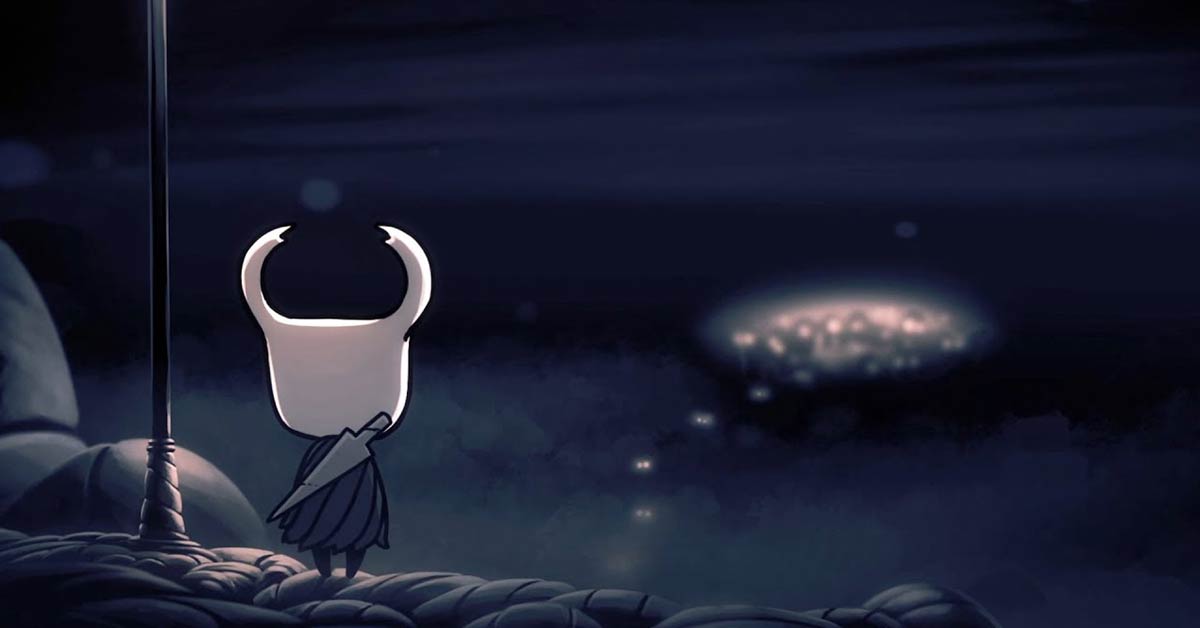
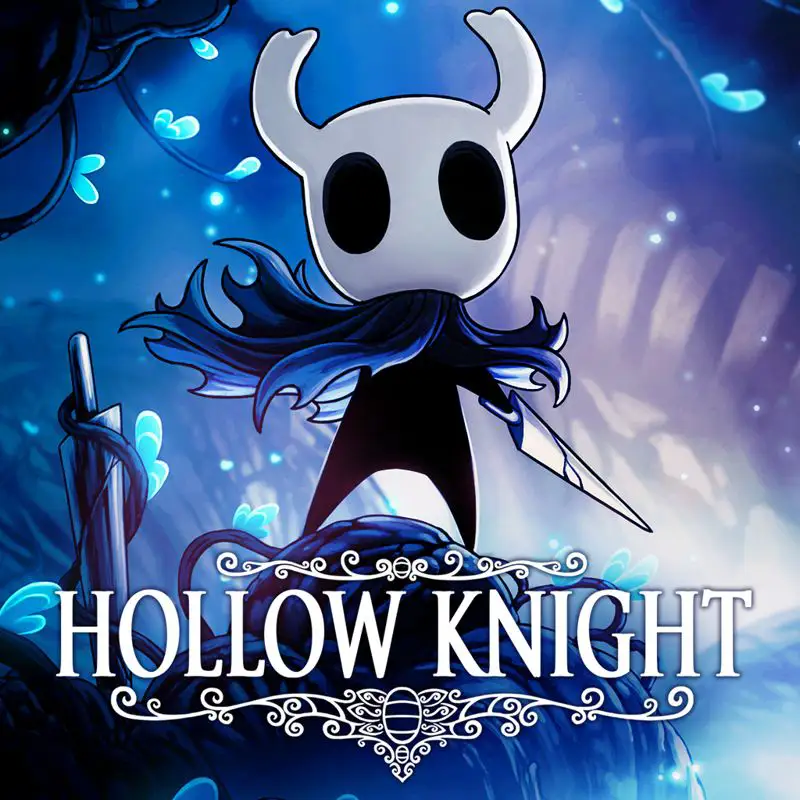
Dropping into the game for the first time (and it was a heck of a drop, off a very tall cliff, apparently) and testing out my combat skills on some little caterpillar-looking things, the art style struck me immediately. The player portrays the Knight, a bright-faced insectoid protagonist set against a dark, dark landscape. On the plus side, I know I’ll probably never lose track of my character on the screen. On the other hand, I’m in for a truly gloomy adventure. Brian circa 2004-2008 would have absolutely loved Hollow Knight. I would’ve been playing this obsessively while listening to Counting Crows, in-between writing journal entries about how lonely I was and taking moody pictures of myself, probably with the Hollow Knight mask Photoshopped over my face! Hey, that doesn’t sound so bad, actually.
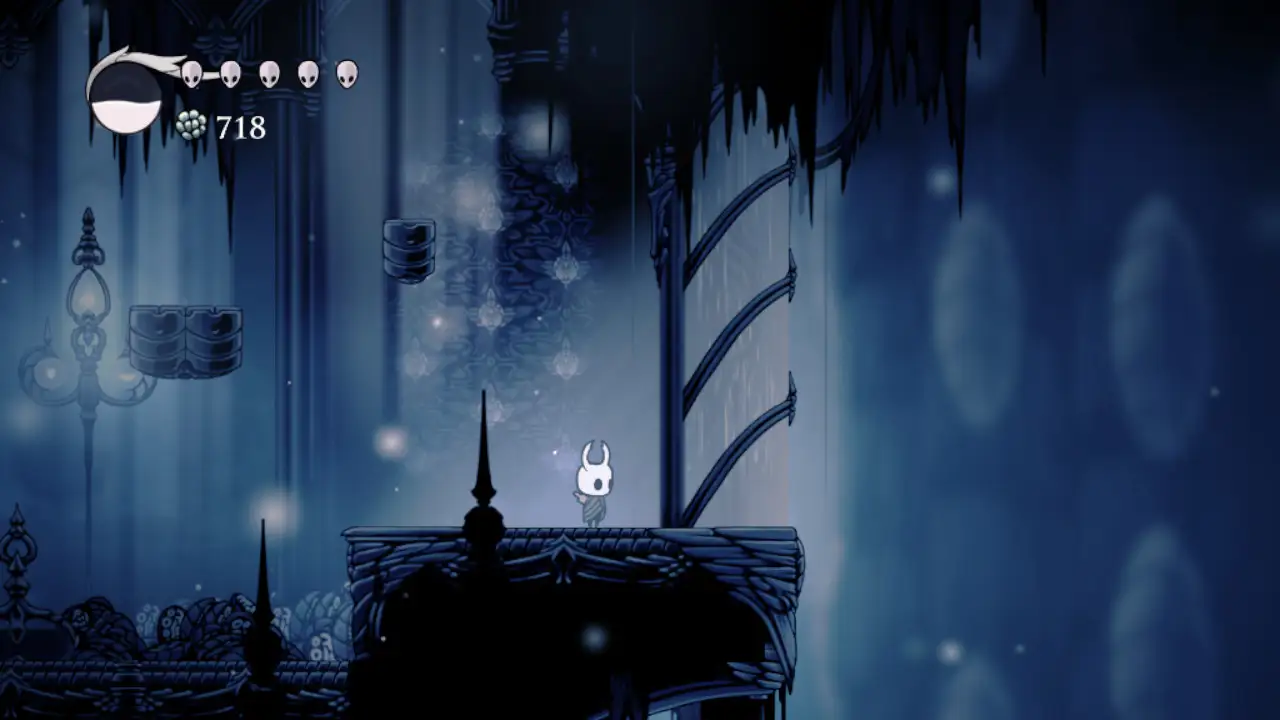
Anyway, it’s a melancholy experience, but it really works. The Knight sets out to explore Hallownest, a ruined subterranean kingdom. The characters in Hollow Knight are all bugs, fungus, and sentient plant creatures, so being below ground fits the living spaces these creatures occupy. Between the many caves, fungus-filled cavities, and other underground corridors the Knight traverses, I got a glimpse of civilization, or what used to be civilization, anyway: an occasional lamp post, an abandoned wagon (crafted from a snail shell or other appropriately sized apparatus for the bug world), or a sign pointing to a bench (save point), stag station (fast travel), or other locations that I couldn’t make out from the vague symbols. Sometimes, a corridor would open up into a building, a simple temple of earth and stone and shells, in some cases, or maybe something more architecturally impressive, with columns and wrought-iron rails and ivy growing all over it, drastically set apart from the rest of its surroundings. My first trip to Queen’s Station mesmerized me, a bastion of civilization for bugs in transit, nestled between the Fog Canyon in one direction and the Fungal Wastes in the other. It must have truly been a site to see in its heyday. Then I found the City of Tears, which further blew me away with its spires and elevators and glass-enclosed observation decks, set against a neverending rain, which I guess pours in from some endless source of water above ground. Minimal internet research tells me art nouveau may have inspired these designs—I only took one art history class in college and definitely don’t know my architectural styles, so don’t fail me, internet!
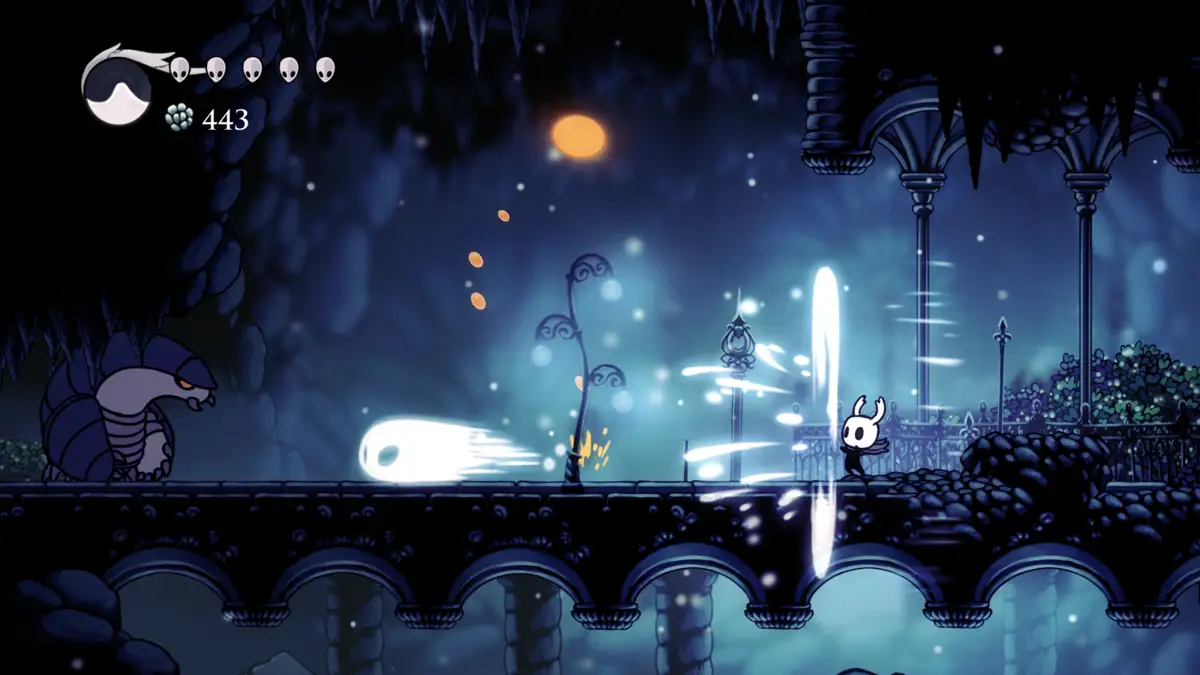
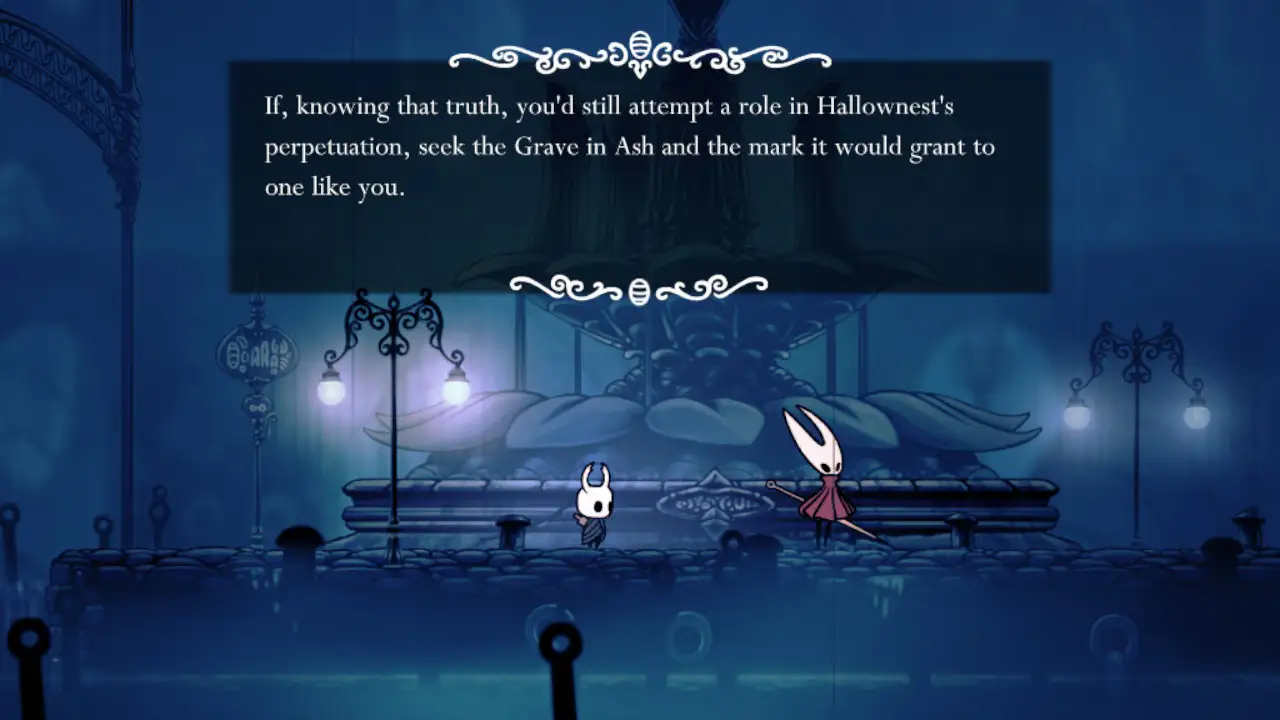
In any case, these designs really got me thinking about ruined society and what Hallownest must have been like at its apex, bustling with trade and whatever else bugs do in an organized society. All the little details in the background of each area piqued my curiosity—what used to happen here? What was this building for? And so on. The mayor of Dirtmouth, a little hub town on the surface, just above the entrance to Hallownest, filled me in to some degree on what the world used to be like, before a mysterious infection spread through the populace and turned everyone into meandering, pustulous walking corpses. But much of what happened, and why the Knight has appeared now, is left to vague clues and our own interpretation. I looked up a few bits about Hollow Knight lore to fill in some gaps because, even though it only took me a couple of months to finish the game (much shorter than I expected, honestly), I didn’t take notes and couldn’t remember every detail or old journal or inscription that I found. It’s a rich narrative experience presented briefly in riddles, clues, and memories, never bogged down by excessive exposition or interruption in gameplay.
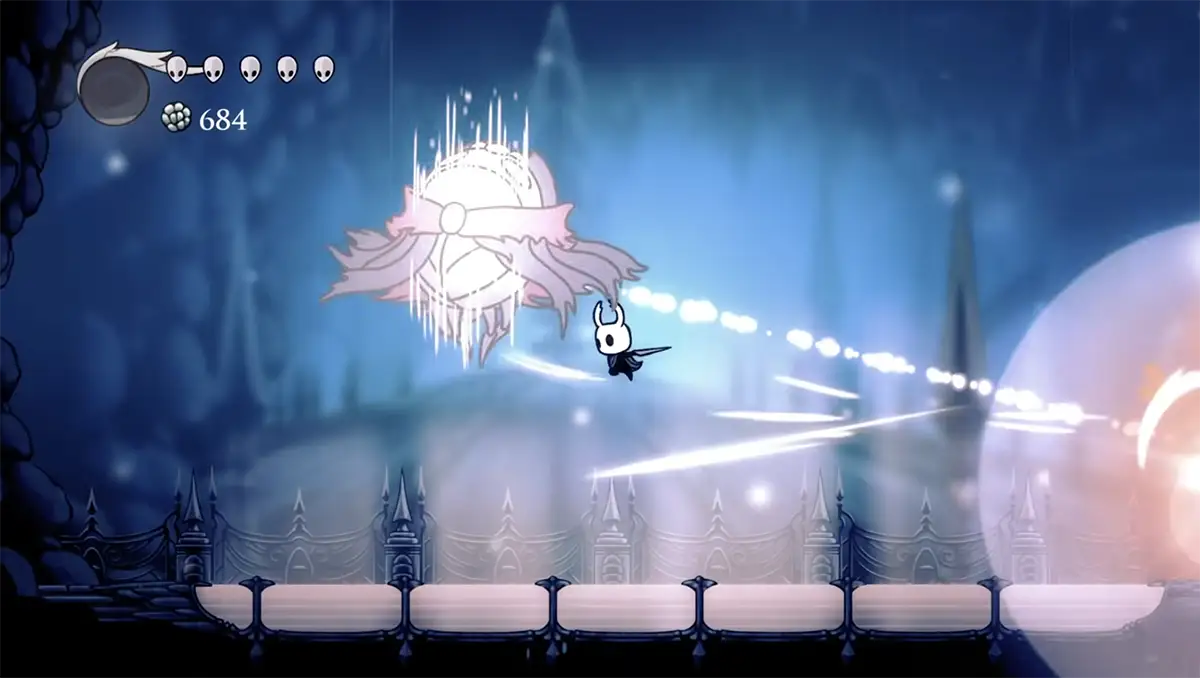
Traversing Hallownest can be a dangerous thing, but there’s a joy and a fluidity to it that even some of the best Metroidvanias can’t match. The Knight acquires most of the typical movement skills of the genre—dash, double-jump, wall-jump, and so on—and they all feel really good to use after a little bit of practice. That becomes important sooner than later, as the Knight must string all of these movements together to overcome many challenging platforming sequences, full of spikes, thorns, big spiny worms, and other hazards. The downthrust of the Knight’s sword (called a nail here) can also be used to bounce off of spikes and enemies, which adds another maneuver to the Knight’s repertoire.
Speaking of bouncing off of things with the downthrust, let’s touch on combat for just a moment. Aside from the weakest, most rudimentary caterpillars and walking mushrooms in Hallownest, the adversaries lurking in the dark don’t fool around. Defeating armed, trained bug knights or the creatures from the deepest, darkest corners of the kingdom requires dodging, jumping, and surgically timed strikes. Combat is really more like a dance than a straight-up fight, and once I got the hang of it, I loved it. I loved circling foes, drawing them in, and picking them apart with the perfect combinations of dodges and strikes. Boss fights demand even more dodging and pattern recognition (and honestly a lot of deaths, in most cases), but once I figured out the patterns, entered the fights with the right charms loadout (more on that later), and put it all together, the thrill of victory justified the frustration leading up to it, for the most part.
Combat probably would have been easier if I used the spells. Yeah, there are magic spells, too, drawing on a substance called Soul that the Knight absorbs by defeating enemies, resting in a hot spring, or striking certain statues scattered throughout Hallownest. The most important spell is Focus, which heals the Knight. I used that one like pretty much every ten seconds. The rest I only remembered to use when I needed them to overcome an obstacle, not at times when they may have been useful in a fight. Sometimes these games have so many systems that I can’t remember all of them when I need them. I don’t think too quickly on my feet.
On that note, I did want to touch on one other system: the charms. The Knight augments its abilities by equipping charms. They can improve movement, combat, soul absorption, and more. The Knight has a limited number of notches the charms can fill, but the number of charms discovered during the adventure offer many customization options. I stuck with a couple of specific sets of charms, one combat-focused, and one exploration-focused. In combat, I liked extending the reach and quickness of my nail while negating knockback when I hit enemies. While exploring, I used everything I could to boost my speed, as well as the charm that showed my location on the map, and the one that gathered geo (money) from defeated enemies for me. Between exploring an enormous kingdom and tricky combat, the economy of movement exceeded most other needs in the game, and both of my standard loadouts focused on that. I’d experiment with new combinations to overcome certain bosses, but always ultimately returned to the ones I felt gave me the greatest edge.
So how is Hollow Knight? Well, like I mentioned above, I should have played it when I bought it and not put it off for seven years or however long. I got off to a pretty casual start, right around the beginning of the new year, playing it for a half an hour here or there. It grabbed me right away—the drip feed of vague clues, interesting NPCs (except Zote the Mighty—get outta here, dude), and my first couple of encounters with the mysterious Hornet had me interested, for sure! But, limited time prevented me from diving into Hallownest as deeply as I would have liked. I felt like I was making good progress. I’d reach a significant boss battle or cutscene, feel a surge of momentum, and figured for sure, on multiple occasions, that I must have been two-thirds or maybe even three-quarters of the way through the game. Then I’d check my inventory and see I had fewer than a quarter of the charms collected and come to my senses, realizing I still had a ways to go. Which was fine—I wanted more.
I got about twelve hours in, and things took a turn. Where I’d had pretty good success against bosses thus far, they suddenly began beating the absolute hell out of me. Previous big bads took me maybe three or four tries to ascertain patterns and defeat them. Once I acquired the Dream Nail, which allows the Knight to enter the dreams of certain characters, I encountered some bosses in the dream realm that took a dozen or more tries to dispatch. Many of the regular bosses followed suit. It felt like a fairly late difficulty spike, but at this point, I was so invested in unraveling the mystery of Hallownest that I wouldn’t allow myself to be discouraged by these difficult encounters. I’d sneak time whenever I could to make more progress, staying up late, braving the creepiest corners of the kingdom, like the Deepnest and the Royal Waterways, or making another run at the Colosseum of Fools between chores at home.
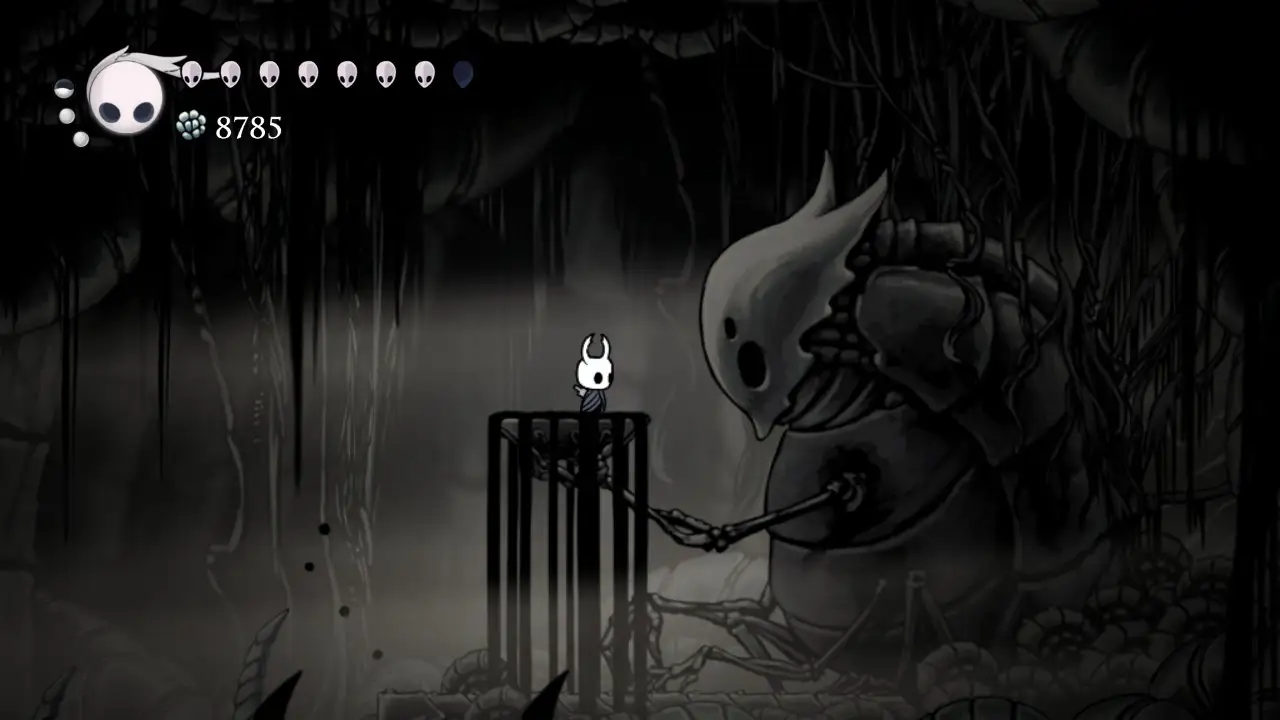
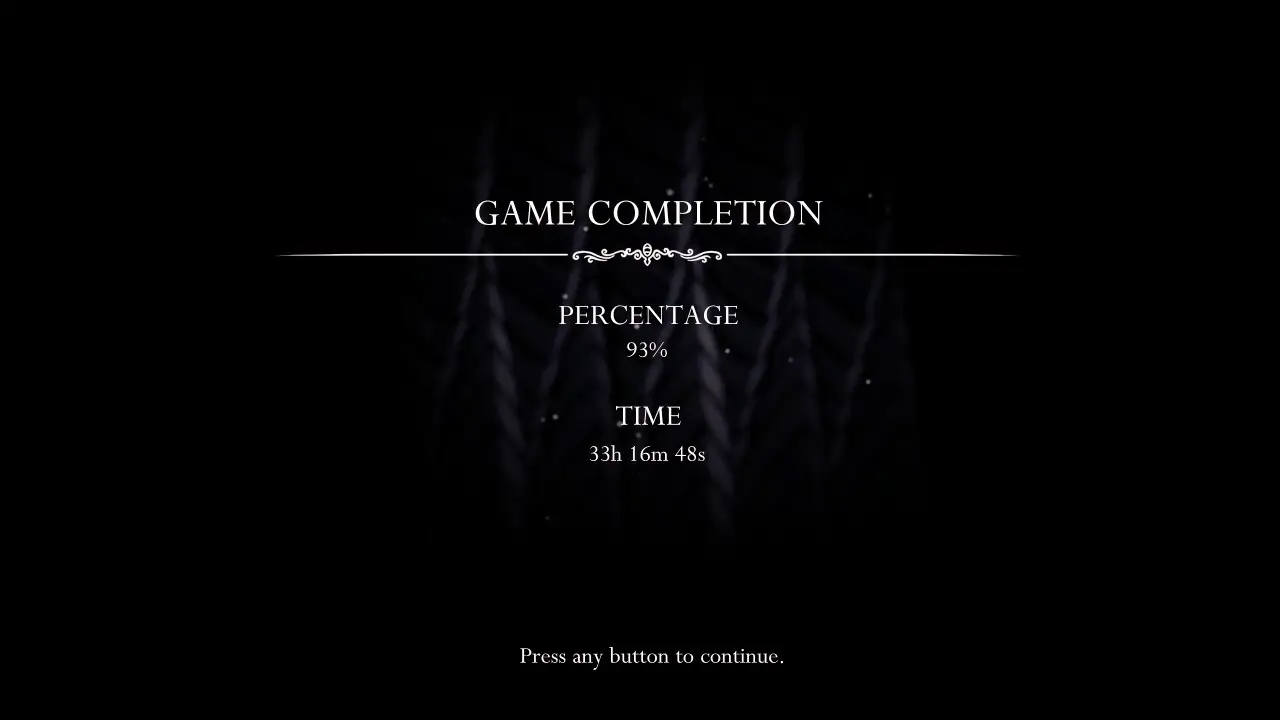
After much (much) additional trial and error, I finished Hollow Knight at 85 percent completion, but I got bad ending vibes from the closing cinematic, so I knew something was wrong. I dug a little deeper and put some more missing pieces together for a better ending, albeit with much more difficulty along the way. I finished with 93 percent this time, so I still didn’t get everything, but I’m satisfied for the time being. Sometime when I’m feeling particularly sadistic, maybe I’ll go back and try the Path of Pain or the Trial of the Fool or the other insane challenges I decided to pass on for now.
So that’s Hollow Knight! A bleak adventure, for sure, but it’s an adventure with fun and solid movement and combat, great art direction, and a stellar narrative. My one regret is that I played most of the game with the sound turned pretty low, so I didn’t get to experience as much of the sound design as I would have liked. Among Metroidvanias, while it doesn’t do much that’s mechanically different from the other major successes of the genre, it excels in its story and design and presentation. I’d always heard Hollow Knight was really long, and I kind of wondered if maybe that’s what deterred me from trying it sooner—long games intimidate me at this stage of my life. Fortunately, the length didn’t detract from the experience, and between the story, exploring new areas, and the rate of acquisition of new movement tech that opened up previously unreachable areas, the pacing delivered all around, never dragging and rarely putting me in the position of feeling like I didn’t know what to do next. The accolades are all deserved. And hey, didn’t a sequel just come out? Leave it up to your ol’ pal Brian to finally pick up the original amidst the hype for a sequel. Behind the times, as always, but what’s new?
Thanks for reading, and see you next mission!
Some Screenshot Credits: MobyGames and this YouTube playthrough